
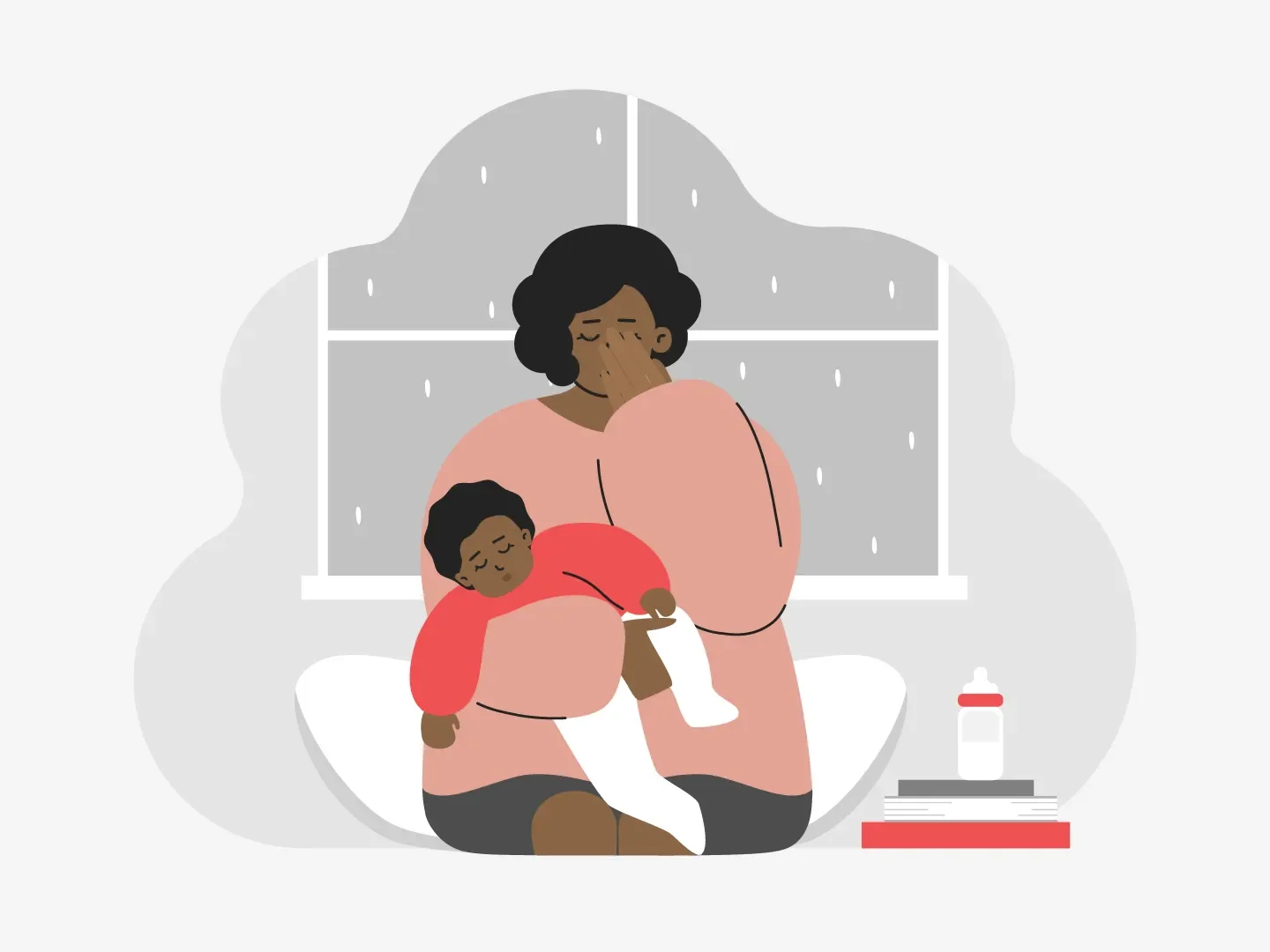
You thought you would have a different birth story.
Maybe things didn't go according to plan. Maybe there was an emergency, an unexpected C-section, a frightening medical experience, or a moment when you felt completely powerless. Maybe you felt ignored, dismissed, or like no one was listening to you.
Or maybe, looking back, you can't quite explain why your birth experience still feels so upsetting. You know you and your baby are okay, but you can't seem to stop thinking about what happened.
You might replay certain moments in your head, feel anxious when someone mentions childbirth, or find yourself feeling unexpectedly emotional when you think about having another baby.
And maybe you've wondered: Why am I still not over this?
First, I want you to know that you're not alone. And you don't have to minimize what happened just because everyone is healthy now.
You can love your baby, feel grateful for your family, and still be deeply affected by your birth experience.
As an EMDR-certified therapist and Certified Perinatal Mental Health Professional, I have a particular passion for helping people process difficult birth experiences and feel more like themselves again.
What Is Birth Trauma?
Birth trauma doesn't look the same for everyone.
For some people, it involves a life-threatening emergency or serious medical complications. For others, it's the experience of feeling frightened, powerless, unheard, or unsupported during labor and delivery.
Sometimes the hardest part isn't even what happened physically. It's how you were treated, how alone you felt, or the feeling that something important was taken out of your hands.
You might be experiencing birth trauma if you:
Keep replaying parts of your labor or delivery.
Have nightmares or upsetting memories about giving birth.
Feel anxious or panicky when thinking about your birth.
Avoid talking about your experience because it's too upsetting.
Feel angry, disappointed, or sad about how things unfolded.
Feel disconnected from your body or your memories of becoming a parent.
Are terrified of going through childbirth again.
Feel like other people expect you to be over it already.
You don't need to have experienced a dramatic medical emergency to be affected by childbirth. Your experience matters, even if someone else might describe it differently.
Why Can't I Stop Thinking About My Traumatic Birth?
One of the things people often find confusing about trauma is that knowing something is over doesn't necessarily mean feeling like it's over.
You might understand that you're home, your baby is safe, and the experience happened months or even years ago. But certain memories can still bring up the same fear, panic, helplessness, or sadness you felt at the time.
Sometimes your mind keeps returning to the experience because there are parts of it that still feel unresolved.
You might find yourself thinking about what you wish had happened differently, what someone said to you, or what you wish you had known at the time.
This doesn't mean you're doing anything wrong. It doesn't mean you're ungrateful or that you aren't enjoying motherhood or parenthood.
It means something happened that affected you, and you deserve the opportunity to work through it.
Can EMDR Therapy Help With Birth Trauma?
Yes. EMDR is one approach that can help people process traumatic birth experiences.
EMDR stands for Eye Movement Desensitization and Reprocessing. It is a type of therapy that helps the brain process distressing memories so they become less emotionally overwhelming.
During EMDR, your therapist guides you through recalling aspects of a difficult experience while using bilateral stimulation, such as guided eye movements or alternating taps.
You don't have to relive every detail of your birth or tell your story perfectly. EMDR is a structured process, and we work together to make sure you feel prepared and supported before processing difficult memories.
For someone who has experienced birth trauma, EMDR may help with:
Memories of a frightening labor or delivery.
Feeling powerless or unsafe during childbirth.
Distressing medical procedures or unexpected interventions.
Feelings of guilt, shame, or self-blame.
Fear surrounding another pregnancy or birth.
Difficult experiences with medical providers.
The goal isn't to forget what happened or convince yourself that it wasn't difficult. It's to help the experience feel less overwhelming so that it no longer has to take up so much space in your present life.
What If My Birth Wasn't Traumatic Enough for Therapy?
I hear this concern in different ways.
Sometimes people feel that their experience wasn't bad enough to warrant therapy. They compare their birth to someone else's, remind themselves that things could have been worse, or feel guilty because their baby is healthy.
But trauma isn't a competition.
You don't have to have almost died, experienced an emergency C-section, or had a particular medical complication to deserve support.
Maybe you felt completely alone. Maybe you weren't listened to. Maybe things happened to your body that you weren't prepared for. Maybe you felt like you lost control of an experience that was supposed to be yours.
You are allowed to have complicated feelings about becoming a parent.
You don't need to prove that your experience was traumatic enough. If it's still affecting you, that's enough reason to explore support.
Is It Too Late to Work Through Birth Trauma?
Not at all.
Some people reach out a few weeks after giving birth. Others come to therapy months or years later, sometimes when they're considering having another child or when something unexpectedly brings the memories back.
There isn't a deadline for processing a difficult experience.
You deserve support whether your baby is six weeks old, six months old, or six years old.
And sometimes working through a previous birth experience can make it easier to approach future pregnancies and medical experiences with a greater sense of confidence and safety.
Finding an EMDR Therapist for Birth Trauma in the San Francisco East Bay
Finding the right therapist matters, especially when you're talking about something as personal as pregnancy, childbirth, and becoming a parent.
I'm Jess Garman, an EMDR therapist and Certified Perinatal Mental Health Professional. I work with people navigating birth trauma, postpartum anxiety, difficult pregnancy experiences, infertility, pregnancy loss, and the many unexpected emotions that can come with becoming a parent.
My approach is warm, collaborative, and grounded in the belief that you shouldn't have to navigate difficult experiences alone.
I use EMDR alongside other therapeutic approaches, always paying attention to what feels manageable and supportive for you. We move at your pace. There is no pressure to share more than you're ready to share.
I offer in-person therapy in Oakland and Lafayette, California, and online therapy throughout California.
If you've been searching for a birth trauma or postpartum therapist, an EMDR therapist, or someone who understands the emotional side of becoming a parent, I'd love to connect.
I offer a free 20-minute consultation so we can talk about what you're experiencing and whether working together feels like a good fit.
You don't have to keep carrying the experience by yourself.
